
Start with the goal: what a well-organized under-sink looks like
Think quick access, protected plumbing, and no buried bottles. A useful under-sink space keeps daily items (dish soap, surface cleaner, sponges), frequently replaced supplies (trash bags, dishwasher tabs), and safety items (gloves, a small first-aid kit, absorbent mat) in clear, stable zones with room to reach the shut-off valves and see any leaks.
Quick triage: what matters and what you can safely ignore
Before rearranging, make three simple decisions: keep (used in the last 6 months), relocate (seasonal or rarely used), discard (empty, expired, redundant). Ignore aesthetic-only fixes now—clear function first. Also prioritize items that must be kept away from children or pets; those require higher storage or locked containers rather than just a tidy bin.
Step-by-step: clear, assess, and plan
Work from empty cabinet to finished setup. That order prevents moving clutter around and reveals problem areas like shallow depth, toe-kick limits, or an odd pipe layout.
-
Empty and clean.
Remove everything. Thoroughly wipe surfaces and check for active drips, mold or water stains. Put down an absorbent tray or thin plastic mat if the base shows discoloration.
-
Inspect plumbing and safety needs.
Locate shut-off valves and note how much clearance the P-trap takes. If pipes intrude low, you’ll need organizers that avoid the center back or that are cut to fit. Consider a small leak detector or a shallow drip tray as an insurance step.
-
Group and decide.
Sort items into groups: daily cleaning, occasional cleaners, garbage/trash liners, spares (soap, dishwasher pods), and hazardous (bleach, drain cleaner). Hazardous cleaners should be sealed, labeled, and placed out of reach or in a lockable container.
-
Measure your cabinet.
Record interior width, depth and height to the underside of the sink. Note any obstructions and the door swing. These numbers decide whether you need sliding units, tiered organizers or stackable bins.
Choose an organizer that fits your cabinet and needs
Options fall into three practical categories: pull-out shelves, tiered sliding baskets, and portable caddies. For most kitchens, a two-tier slide-out shelf gives the best balance of capacity and access.
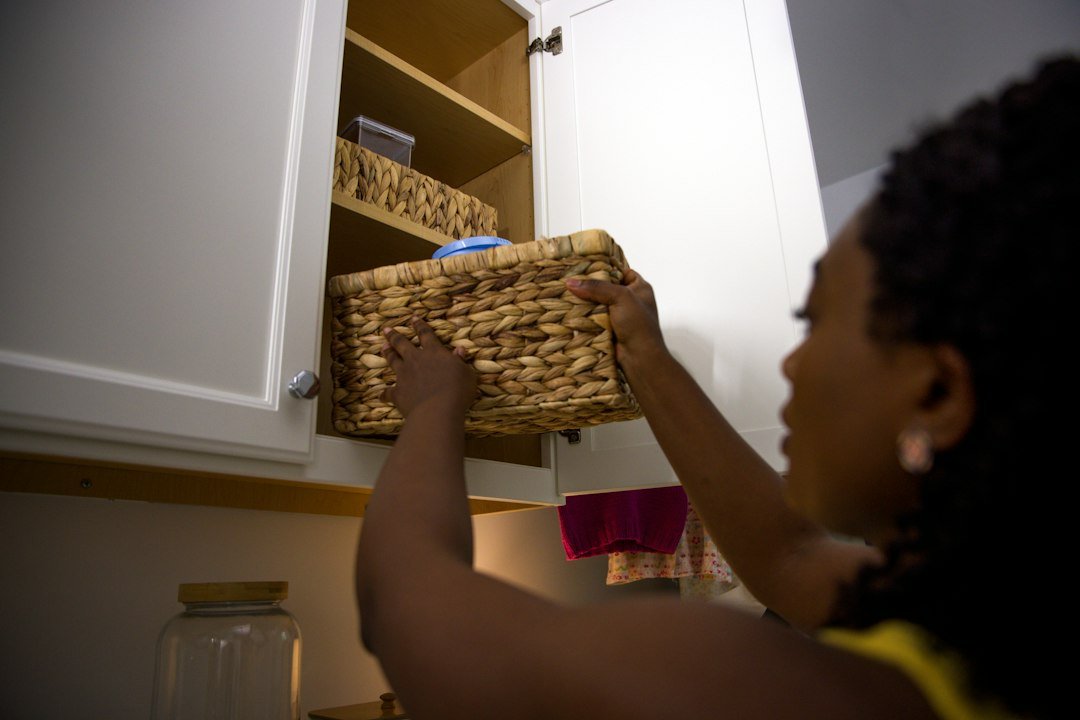
Recommended option (fits most under-sink problems): a two-tier pull-out under-sink shelf. It lets you reach items behind pipes without crawling into the cabinet, holds a mix of tall spray bottles and smaller boxes, and keeps the middle area clear for plumbing access.
This is a good choice when you want full pull-out access and an organized top and bottom tier. If your cabinet is very shallow or has a low door clearance, a shallow tiered basket or portable caddy may be better.
Install and arrange for function, not perfection
-
Fit the organizer.
Follow the manufacturer’s template, or if it’s a freestanding rack, place it so the P-trap and valves remain accessible. When mounting rails, double-check for level and smooth travel; a misaligned pull-out becomes useless quickly.
-
Place heavy items low and toward the front.
Put frequently used heavy items (dish soap refill jugs, large detergent) in the front on the lower shelf; lighter or seasonal items go on the upper tier. Avoid stacking breakable glass bottles under the sink.
-
Use a caddy for sprays and small tools.
A portable sink caddy holds the sprays, scrubbers and gloves you use every day. You can lift it out for a quick clean or to use at the sink.
-
Label and standardize.
Simple labels on bins reduce decision friction. Use clear or opaque bins sized to the shelf interior so nothing hides behind another item.
Adaptations for common cabinet problems
- Small or shallow cabinets: choose low-profile sliding baskets or a single shallow pull-out. Vertical bottle holders that attach to the door can reclaim floor space.
- Unusual pipe layout: use L-shaped or open-bottom shelving that skips the pipe zone; keep a small open area for access to valves.
- Shared under-sink (kitchen + garbage disposal): create zones—left for daily sink supplies, right for disposal tools and trash bags. Keep any disposal lubricant or specialized supplies together and labeled.
- Concern about leaks: place a shallow drip tray under the entire cabinet floor and keep absorbent pads you can swap when wet. Consider a small battery-powered leak alarm in the back corner.
Maintenance routine that keeps the system working
Spend 5 minutes once a month to remove empty bottles, wipe spills and realign the pull-outs. Every six months, re-evaluate—if an item hasn’t been used, relocate or discard it. These short habits prevent the slow creep back into a messy cabinet.
Checklist, practical takeaway and FAQs
- Empty cabinet and inspect for leaks before you buy anything.
- Measure width, depth and clearance to pick a compatible organizer.
- Group items by use frequency and hazard level before arranging.
- Install pull-out or tiered unit leaving plumbing accessible.
- Use a portable caddy for daily tools and a drip tray for leak protection.
Focus first on clearing and measuring. For most cabinets, a two-tier pull-out organizer plus a portable caddy solves access and visibility problems while keeping plumbing accessible; maintain with a quick monthly check.
How do I measure for a pull-out under-sink shelf?
Measure the inside cabinet width, depth from the back to the front frame, and the height under the sink (to the lowest point of the sink or pipes). Also note door swing and any obstructions.
Can I store bleach and other chemicals under the sink?
Yes if sealed upright in a stable bin and kept away from food items or children; consider a lockable container or higher shelf if child safety is a concern.
What is the best organizer for odd-shaped pipes?
Open-bottom or L-shaped shelving that leaves the pipe zone clear, or freestanding tiers that can be shifted around the plumbing, work best.
How do I prevent mold or smells under the sink?
Keep the area dry with a drip tray, clean up spills immediately, and periodically air it out; replace absorbent pads if they become damp or moldy.
Is it worth installing a sliding unit vs. using bins?
Sliding units provide easier access to the back of the cabinet and are worth the install if you store many items; bins are simpler and portable for minimalists or renters.