
Most buyers focus on brand or pressure—but what actually matters
People often fixate on “20-bar pumps” or flashy metal finishes. Those specs matter far less than how you plan to use the machine. To choose the best home espresso machine, start with three practical questions: what drinks you’ll make, how much hands-on control you want, and the counter space you can spare. Answer those first and the rest — pressure, PID, boiler type — falls into place.
Decide by use case: which routine fits you
Your daily habits determine the machine class you should consider.
- Pure espresso shots, minimal fuss: If you want quick single or double shots and you’ll use pre-steamed milk or milk alternatives separately, a compact semi-automatic with a good pump and stable temperature is ideal.
- Regular lattes/cappuccinos or family drinks: Choose a machine with a capable steam wand and enough steam pressure/boiler capacity to texture milk quickly. A dual boiler or a single boiler with strong steam output will save time when making multiple drinks.
- Maximum convenience: Super-automatic machines grind, tamp and brew with one button. They suit busy households but sacrifice some control, footnote-level crema quality, and routine maintenance is different.
- Hands-on hobbyist: If you want café-level control over flow and temperature, pick a machine with PID temperature control, pre-infusion, and a decent commercial-style group head. Expect a longer learning curve.
Key technical priorities explained (so you can compare models)
Here are the few specs that actually change results and user experience.
- Temperature stability (PID): A PID or electronic temperature control keeps extraction consistent. If you care about shot repeatability, this is more useful than an advertised pump pressure.
- Boiler type and recovery: Single boilers are compact but require wait time between brewing and steaming. Heat-exchange or dual-boiler machines let you brew and steam nearly simultaneously—handy for milk drinks.
- Pump pressure vs. real extraction: Most home machines advertise 15–20 bar pumps, but extraction relies on flow profile and temperature, not just max bar. Focus on pump reliability and pre-infusion features rather than the highest number.
- Steam wand quality: Look for a wand with good steam pressure and/or a commercial-looking tip; this makes microfoam faster and steadier. For frequent milk drinks this is non-negotiable.
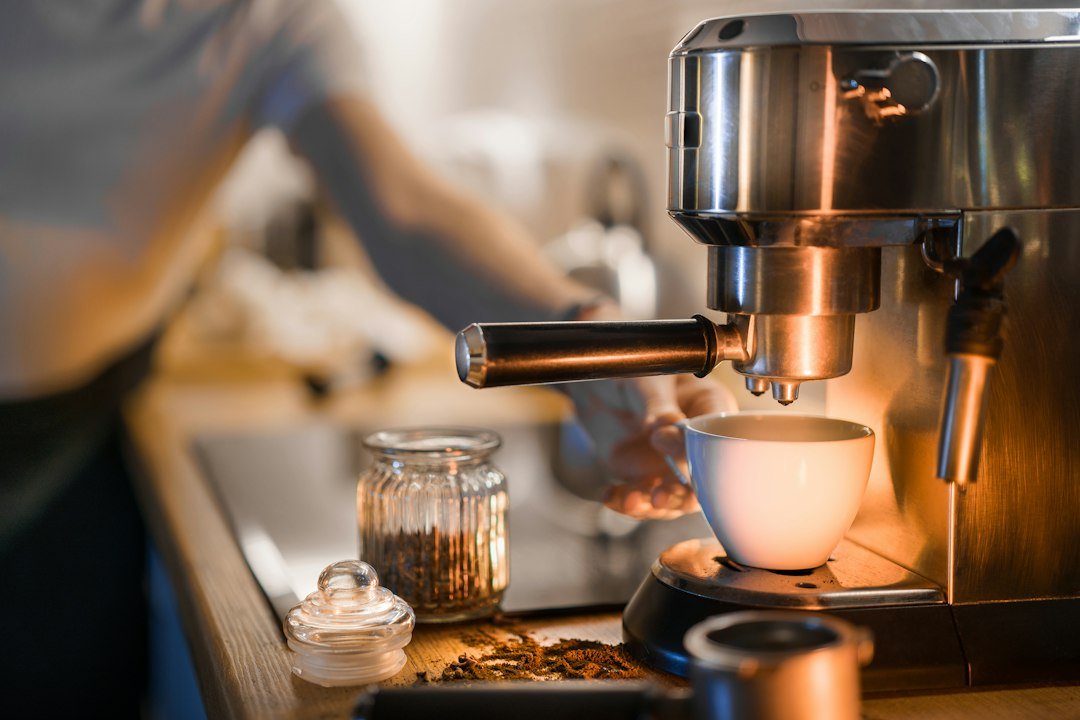
- Portafilter size and basket options: A 58 mm portafilter is standard on higher-end machines and offers more consistent shots; compact machines often use 49–54 mm. If you plan to dose and tamp precisely, prefer larger sizes and replaceable baskets.
Workflow and kitchen fit: size, water, and maintenance
Practical constraints determine satisfaction over time.
- Counter space: Measure width/depth and leave room to open the portafilter and place a milk pitcher. Tall machines can also block upper cabinets.
- Water supply and tank size: Smaller reservoirs need refilling more often. If you make multiple drinks daily, choose a larger tank or a model with a plumb-in option.
- Cleaning and access: Removable drip trays, accessible group heads, and simple descaling routines save time. Super-automatics require different cleaning (brew unit removal and milk-system care).
- Noise and heat: Pumps and steam boilers emit noise and heat—if your kitchen is small or open-plan, consider quieter pumps and better insulation.
Pairing: the grinder and accessories that matter
Even the best machine will underperform with a poor grinder. A consistent burr grinder tuned to espresso is essential. If you’re new to dosing and tamping, add an espresso tamper and a distribution tool to avoid channeling.
Recommended first accessory: a decent burr grinder. If you prefer a near-turnkey route, consider an all-in-one machine with a built-in grinder, but know that integrated grinders usually don’t match the performance of a separate mid-tier grinder.
When price meets expectation: what to buy for common budgets
Match budget to your priorities rather than buying the most expensive model you can afford.
- Entry-level (~$100–$400): Compact semi-autos or capsule machines. Good for beginners or small households; expect limited steam power and smaller portafilters.
- Mid-range (~$400–$1,200): Strong choice for most home baristas: better temperature control, sturdy steam wands, and larger portafilters. Excellent value if you want milk drinks and control.
- High-end (>$1,200): Dual-boiler or prosumer machines with PID, commercial components, and rapid recovery. Best for enthusiasts and households that make many milk drinks daily.
Real product fit: one recommended machine for most home buyers
For a balance of value, control and steam power, consider the top-ranked compact 20-bar semi-automatic from our catalog. It offers NTC temperature control, pre-infusion and a strong steam wand—covering shots and milk drinks without a big footprint.
When to prefer a different model
- If you want the least hands-on experience, choose a super-automatic or an all-in-one with integrated grinder (see Rank #7 for an all-in-one option).
- If you make lots of milk drinks for a family, step up to a dual-boiler or a machine with faster steam recovery (higher-end prosumer models).
- If space is extremely limited, pick a slim compact model with a smaller portafilter (Rank #6 CHULUX is a compact option).
Quick decision checklist before you buy
Use this to avoid buyer’s remorse.
- Confirm daily drink types (shots vs. milk drinks) and choose boiler/steam accordingly.
- Measure counter space and water tank access for routine use and cleaning.
- Plan for a good grinder or an integrated grinder alternative.
- Check portafilter size and availability of spare baskets and parts.
- Read upkeep steps (descale, backflush, milk-system cleaning) and factor time into your choice.
Decide what you make and how hands-on you want to be. Prioritize temperature stability, steam power, and a proper grinder over headline pump numbers. For most home users, a mid-range semi-automatic with a solid steam wand is the most versatile choice.
Do I need a separate grinder for good espresso?
Yes—consistent grind size is critical. A quality burr grinder will improve extraction more than upgrading other machine specs.
Is a 20-bar pump better than a 15-bar pump?
No; advertised bar numbers are marketing. Reliable pump construction and temperature control have a greater effect on extraction than the maximum pressure figure.
Can I make milk drinks on compact machines?
Some compact machines can steam milk but may have weak wands and slow recovery. If you regularly make lattes, prefer a machine with stronger steam output or faster recovery.
How important is PID temperature control?
Very important for consistent shots. PID reduces temperature swings that cause under- or over-extraction, especially when dialing in different beans.
What maintenance should I expect?
Regular tasks include backflushing (for machines with a three-way valve), descaling, cleaning the steam wand, and replacing water filters as recommended.