
What you’ll end up with: a fridge that keeps food visible, prioritized and fresher longer
When you organize your refrigerator correctly you reduce food waste by making perishable items easy to find, store at the right temperature and move through on a sensible schedule. This guide shows how to organize refrigerator shelves, drawers and containers so produce, dairy and leftovers last and get eaten first.
Set the foundation: check temperature, clean and declutter
Start by ensuring the fridge is cold enough (between 35–38°F / 1.5–3°C). Remove expired items and wipe shelves—decluttering gives you real space to work with and reveals forgotten food that you can rescue right away.
Create functional zones so similar items live together
Designate consistent areas for these groups so everyone in the household knows where things belong:
- Ready-to-eat items (deli meats, prepared salads) on middle shelves at eye level.
- Meal-prep and leftovers on one shelf, front row reserved for the soonest-to-eat containers.
- Dairy and cheese on a colder shelf (not the door) because the door is warmest.
- Raw meat on the bottom shelf in a leak-proof pan to avoid cross-contamination and catch juices.
- Door for condiments, juices and butter—items that tolerate temperature fluctuations.
- Crisper drawers for fruit and vegetables with humidity set appropriately (high for leafy greens, low for fruit).
Pick containers that make food visible and stackable
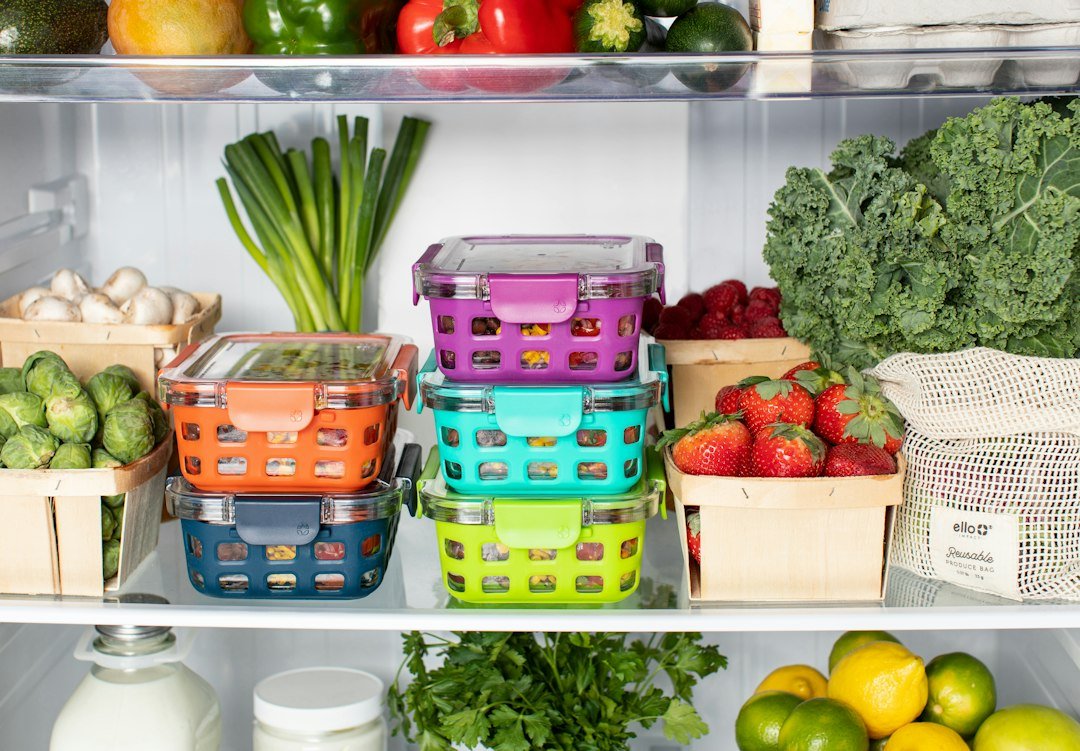
Clear, uniform containers and bins change behavior: you see what you have and can stack without wasting space. Use shallow, wide containers for leftovers (they cool faster and stack better) and clear bins to group small items like cheese snacks, yogurt tubes or sauce packets.
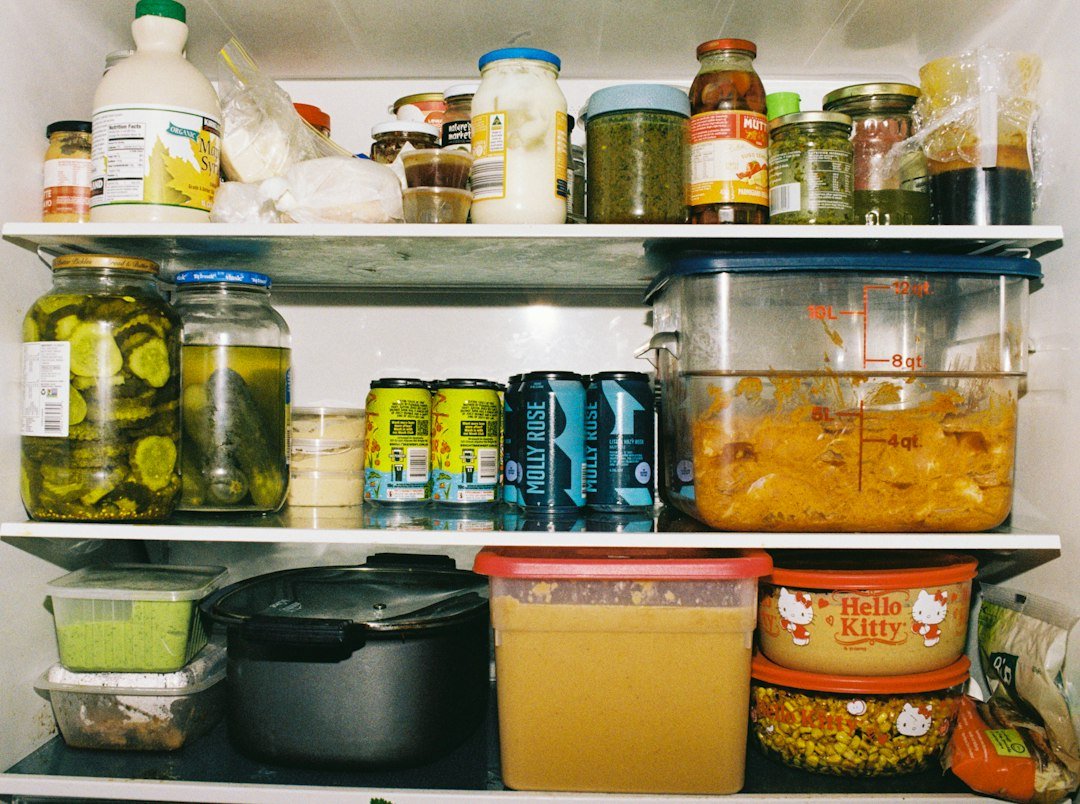
Product pick: a simple set of clear fridge bins quickly organizes shelves and keeps small items corralled—consider a top-ranked option like the Diskary Fridge Organizer to create consistent groupings and stackable layers.
Use a simple labeling system to enforce “eat-first” rules
Label containers with a short date and a basic code: “Eat by” for perishables and “Cook by” for raw proteins. A roll of masking tape and a fine-tip marker is enough; preprinted erasable labels also work. Put the soonest-expiring items at the front of the shelf (first in, first out).
Optimize crisper drawers: humidity and separation
Most refrigerators have two crisper drawers—use them. Set one to high humidity for leafy greens and vegetables that wilt, and the other to low humidity for fruits that rot from trapped moisture. Store ethylene-producing fruit (apples, pears) separately from sensitive produce (lettuce, carrots) to slow ripening.
Manage leftovers so they get eaten, not forgotten
Reserve one clear shelf for leftovers and meal prep. Adopt a single shortcut: move that day’s leftovers to the front and mark with a “3-day rule” date. If something sits past three days, decide to eat, freeze, or compost—don’t let it sit ambiguous until it smells bad.
Adjust placements to fridge temperature zones
Temperatures vary inside any fridge: the coldest zone is usually the back of the bottom shelf. Use the coldest areas for raw meat (in a sealed dish) and highly perishable dairy. Keep eggs and butter in the main body rather than the door if you want them to stay cooler and last longer.
Small habits that preserve food long-term
- Check the fridge weekly for items nearing their “eat-by” dates and plan meals around them.
- Store herbs like flowers in a jar of water wrapped loosely in a bag to extend freshness.
- Trim mold and salvageable parts of produce when safe, then use immediately in soups or smoothies.
- Cool hot food to room temperature briefly, then refrigerate in shallow containers to reduce internal humidity and bacterial growth.
Troubleshooting and simple adaptations
If you have a small fridge: prioritize visibility—use one clear bin for meal prep and hang a magnetic list on the door for “eat-soon” items. If you share a fridge, put a labeled shelf and create a short note describing the “eat-by” rules to avoid confusion. For open-plan kitchens with limited counter space, store overflow items in stackable clear bins that can be pulled out like drawers.
Where organization meets tools: when to buy fridge organizers
Buy fridge organizers when inconsistent food placement, frequent spills, or lost items are recurring problems. Clear, stackable bins are the most versatile purchase; they help maintain zones and reduce rummaging. For small fridges, pull-out drawer organizers make access easier and cut the temptation to leave food hidden at the back.
- Check and set fridge temp to 35–38°F (1.5–3°C).
- Create and label zone locations for leftovers, dairy, raw meat, and condiments.
- Buy one set of clear stackable fridge bins for grouping small items.
- Use crisper drawer humidity settings: high for greens, low for fruits.
- Adopt a 3-day rule for leftovers with visible date labels.
- Schedule a 10-minute weekly fridge check to re-plan meals.
Organizing your refrigerator focuses attention on food you already own. Prioritize visibility and a few simple rules (zones, labels, weekly checks) to prevent spoilage and make meal planning easier.
How often should I clean and reorganize the fridge?
Do a light tidy weekly and a full clean-and-decline every 1–2 months depending on usage; weekly checks prevent most waste.
Can storing food in the door cause faster spoilage?
Yes—the door is the warmest area and best for condiments and juices, not highly perishable dairy or leftovers.
Are clear bins really worth the cost?
Clear bins pay back quickly by preventing hidden items and enabling shelf discipline; choose one small set before buying more.
How should I store raw meat to avoid contamination?
Keep raw meat on the bottom shelf in a sealed container or tray to catch leaks and away from ready-to-eat foods.
What’s the best way to store herbs?
Trim stems and put herbs in a jar with water covered loosely by a plastic bag, or wrap in damp paper towel and place in a breathable container.