
You know the feeling: hunting for a measuring spoon while dinner burns, or opening a drawer only to unleash a jumble of rubber bands, pens and single-use packets. A well-organized set of kitchen drawers saves time and reduces stress every time you cook. Below is a clear, practical plan to organize kitchen drawers so each one has a purpose, everything fits, and maintenance is painless.
What a clutter-free drawer system looks like
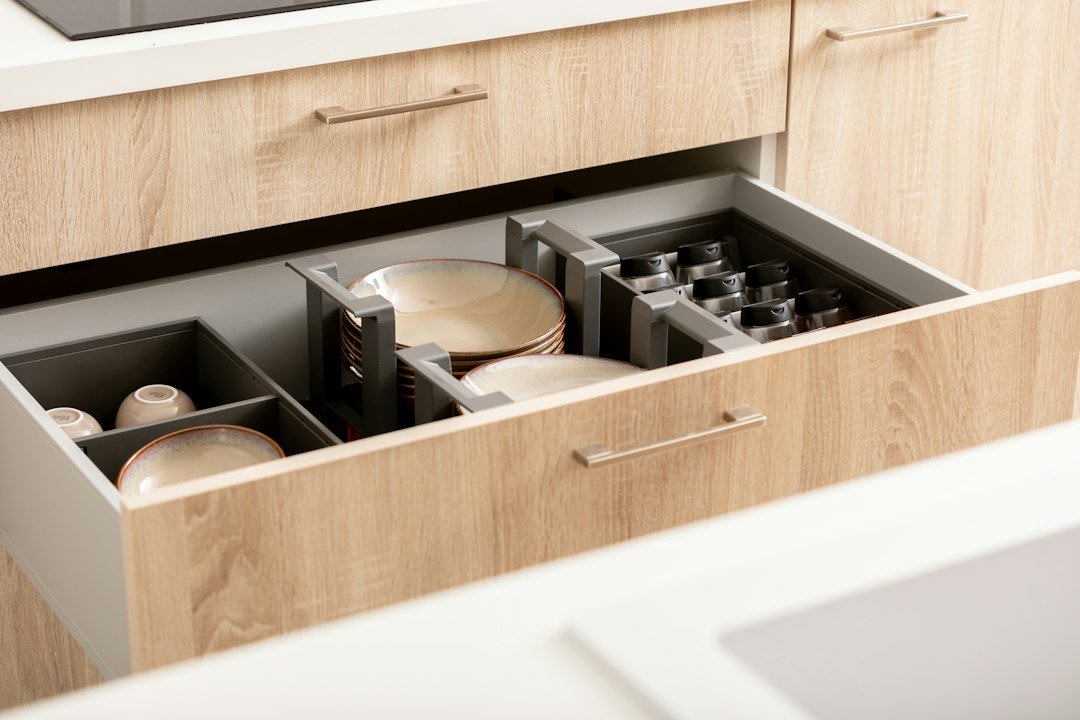
A functional drawer system places the most-used tools closest to where you work, groups similar items, uses dividers to prevent mixing, and reserves one shallow drawer for miscellaneous small items (the “junk” drawer, controlled). The result: you can reach naturally for utensils, find lids and foil without rifling, and keep bulky cookware in deep drawers without wasting space.
Measure and map your drawers before buying anything
Start with measurements: internal width, depth, and height of each drawer, plus distance from the drawer face to any sliding hardware. Note which drawers are shallow (1–2" free height), medium (3–5"), or deep (6" or more). Draw a simple floor plan of your lower cabinets and island drawers that shows proximity to the stove, sink and prep areas—that's your placement map.
Assign a clear role to every drawer
- Utensils: nearest to prep/stove. Forks and spoons if you don't have a silverware tray in the dining area.
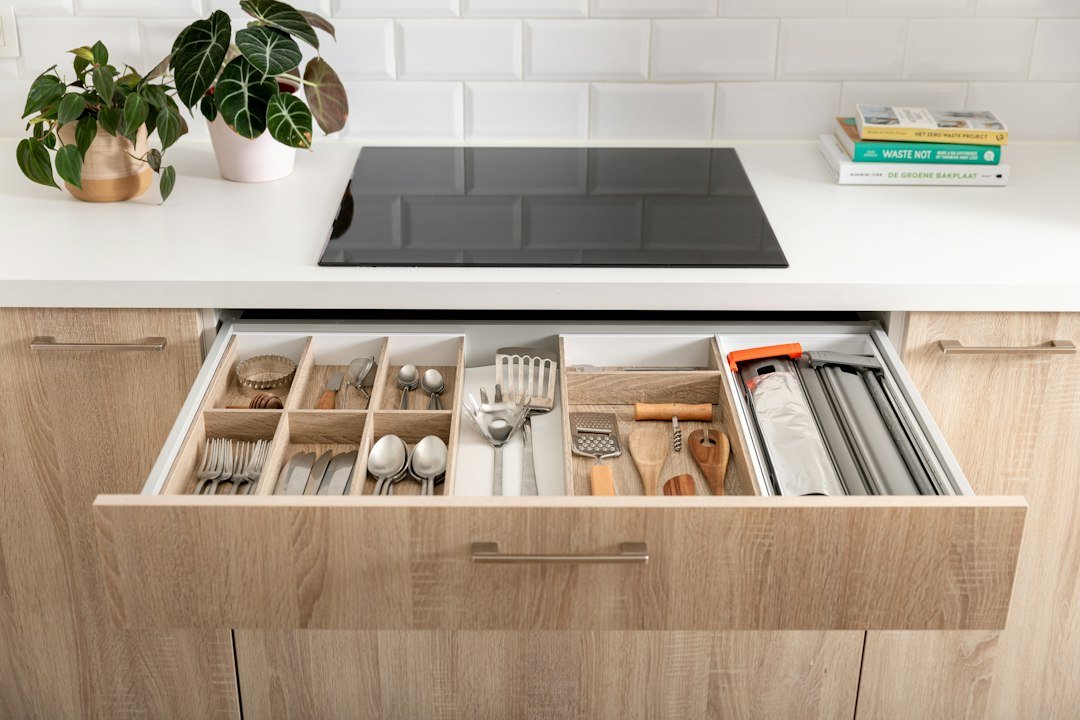
- Cooking tools: spatulas, wooden spoons, tongs in a dedicated tray or divided area next to the stove.
- Cutlery/knives: in a flat knife tray or block insert in a drawer with enough depth for blade covers.
- Measuring tools and small gadgets: measuring cups/spoons, peelers, thermometers in a shallow drawer near the baking area.
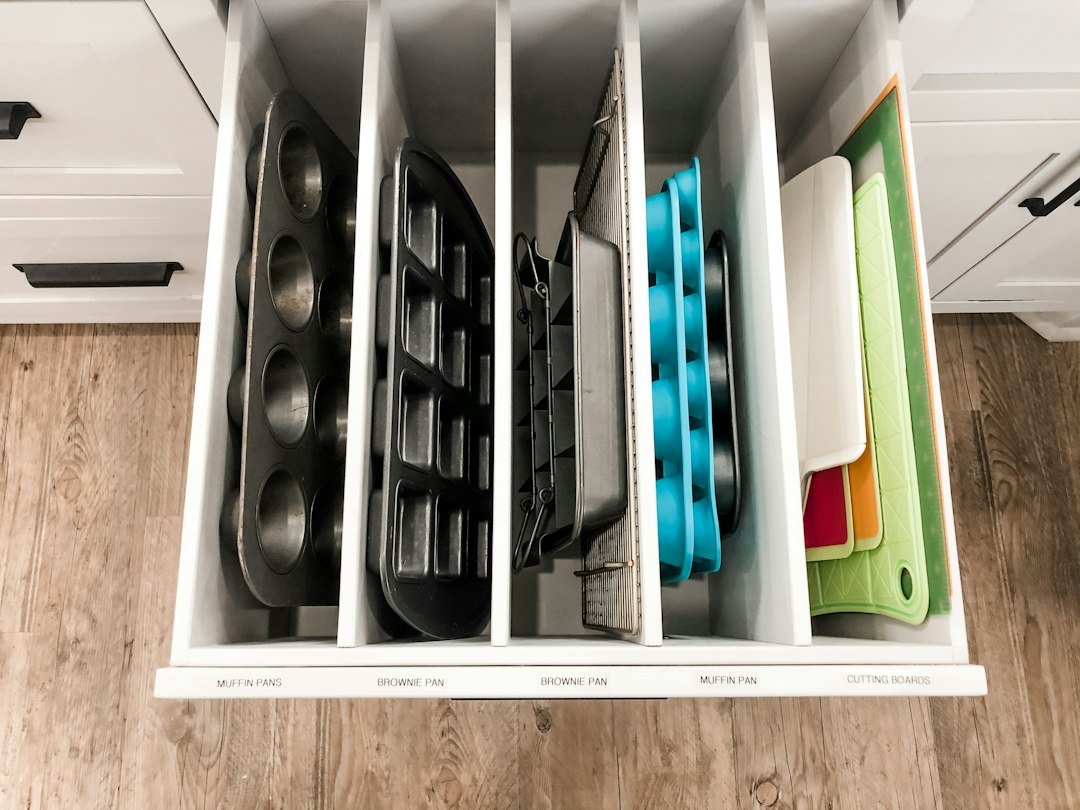
- Lids and trays: vertical dividers in a deep drawer or dedicated lid organizer near pots and pans.
- Pots and pans: deep drawers with stacked organizers or tiered racks under the range.
- Food wraps and bags: a pull-out drawer organizer near the prep zone or pantry.
- Controlled junk drawer: one shallow drawer only, with internal compartments and a regular purge schedule.
Choose the right organizers for each drawer
Fit the tool to the drawer. Soft fabric trays work well for cutlery to reduce noise; bamboo or plastic modular inserts are durable for everyday utensils. For deep drawers storing pans, use a vertical pot-and-pan organizer so lids and skillets stand on edge; this uses vertical space and prevents stacking damage.
For small miscellaneous items, use shallow compartment trays or a collection of small bins. Adjustable dividers are the most flexible — they let you reconfigure when your needs change (new appliances, more baking gear). If you have odd-shaped items, foam inserts tailored to fit a single large utensil or gadget can be a tidy solution.
How to declutter before you organize
- Empty one drawer at a time and wipe it clean.
- Sort items into keep, relocate, donate, discard. Be strict: if something hasn’t been used in a year, consider letting it go.
- Group the keep pile by function (cutlery, cooking tools, baking, electronics chargers, etc.).
- Return only the items that fit the drawer’s assigned role—everything else gets a new home.
Layout and placement tips that actually save time
- Place most-used utensils in the topmost reachable drawer beside the stove; reserve lower drawers for pots and bulk storage.
- Keep sharp knives in a dedicated tray close to prep space, not in a mixed drawer with forks.
- Store lightweight, frequently used items (tea towels, silicone spatulas) in shallower drawers to avoid digging.
- Group like with like: baking tools together, breakfast items grouped for morning efficiency.
One product that reliably solves deep-drawer chaos
If deep drawers are your main problem — heavy pans stacked and hard to reach — a vertical pot-and-pan organizer converts wasted horizontal space into easy access. Use one where you keep cookware; it reduces lifting and protects nonstick surfaces.
Labeling and small habits that keep drawers organized
Labels are especially useful in households with multiple cooks or kids. Simple vinyl labels on the inside face of a drawer or on dividers make roles clear. Adopt two short habits: (1) a 60-second end-of-day reset—return items to their drawer; (2) a weekly five-minute purge of the junk drawer to toss expired coupons, loose screws and the like.
Troubleshooting: when the system reverts to chaos
If a drawer becomes messy again, first check whether its assigned role matches actual use. People often put frequently used items into the nearest available drawer, not the one planned—adjust placement to match real traffic patterns. If tools still slide around, add non-slip liner or tighten divider spacing. For reluctant declutterers, set a three-item limit on rarely used gadgets in each drawer.
Adapting for special situations
- Small kitchens: use multi-function drawers—one drawer can hold both prep tools and measuring gear if divided well. Consider vertical knife strips attached inside a drawer to save surface space.
- Rentals or delicate drawers: use removable adhesive dividers or foam trays so you don't damage surfaces.
- Shared kitchens: dedicate a labeled drawer to personal items (lunch bags, thermoses) to prevent crossover clutter.
Maintenance check: what to do each month
Monthly: remove crumbs and wipe liners; realign dividers; discard single-use items and expired packets. Every six months: re-evaluate drawer roles (have cooking habits changed?) and replace any worn liners or broken organizer pieces.
- Measure internal drawer dimensions and map their workspace proximity.
- Assign a single function to each drawer based on how you cook.
- Declutter by strict keep/relocate/donate/discard sorting.
- Install appropriate dividers: utensil trays, vertical pot organizers, shallow bins.
- Label drawers/dividers and set a 60-second nightly reset habit.
- Monthly wipe-down and six-month role review.
Start by measuring and assigning roles; choose dividers that match drawer depth; declutter ruthlessly; place the most-used items nearest to work zones; and keep two short habits to maintain order. Small changes in layout and one reliable organizer for deep drawers produce a roomier, faster kitchen.
Which drawer should hold knives?
Place knives in a dedicated knife tray or covered knife block in a drawer near the primary prep area for safe, quick access—avoid mixing with cutlery or loose utensils.
How can I store pot lids in a drawer?
Use vertical dividers or a lid rack so lids stand on edge; this prevents clanking, saves space and makes the correct lid easy to grab.
What if my drawers are different sizes?
Assign tasks by drawer size: shallow drawers for cutlery and small tools, deep drawers for cookware and bulky items; use adjustable dividers to adapt dimensions.
How often should I declutter a junk drawer?
Weekly or bi-weekly five-minute purges keep junk drawers useful; monthly wipe-downs and a six-month full review prevent long-term creep.
Are drawer liners necessary?
Not mandatory, but non-slip liners reduce noise, protect finishes and keep lightweight items from sliding when drawers open and close.